Today, we talk a lot about stress. Stress at work from trying to keep up with everything expected of us. Stress in everyday life from balancing relationships, children, hobbies, exercise, a clean home, pets… yes, the list goes on.
But at the same time, we talk less and less about how stress actually affects the body.
It almost feels as though we’re expected to live the most hectic lives possible. Being busy has practically become a status symbol — you’re supposed to work hard, train hard, be social, take care of your home, and still always perform at your best.
But the truth is, the body is not designed to live under constant stress.
Stress in short periods is actually natural. The body is built to handle temporary stressful situations. The problem arises when stress becomes long-term and the body never really gets the chance to recover.
Cortisol – The body’s stress hormone
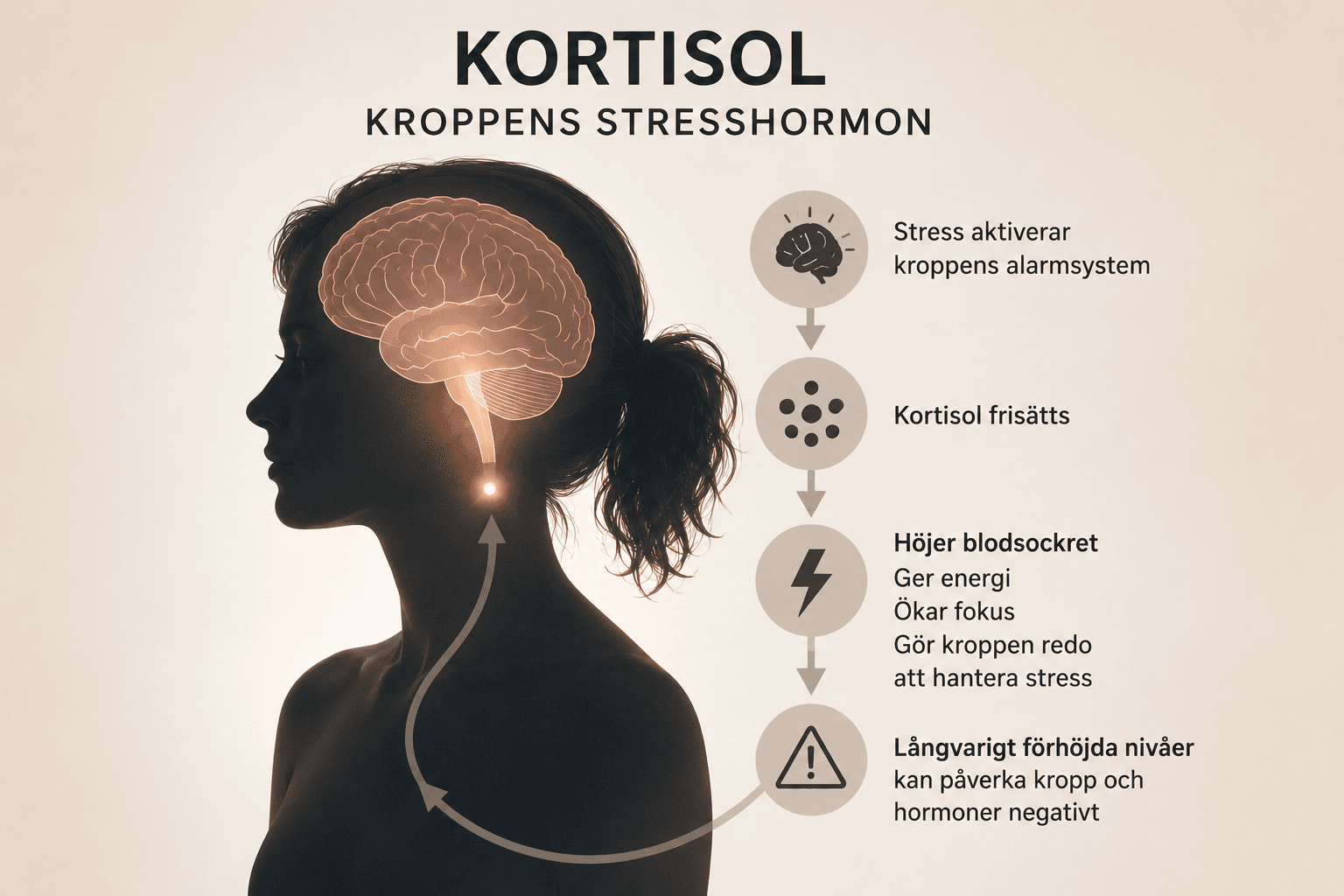
When we are exposed to stress, the body’s alarm system is activated and the hormone cortisol is released.
Cortisol actually has an important function. It helps the body manage stress by, among other things:
raising blood sugar levels
increasing focus and alertness
releasing energy
keeping the body ready to handle stress and danger
The problem occurs when cortisol levels remain elevated for a long time.
The body is not designed to stay in a constant state of stress — and when cortisol remains high over extended periods, it begins to negatively affect both the body and the hormonal system.
How does stress affect our hormones?
When cortisol remains elevated for a long time, the body prioritizes survival over recovery and balance. This can affect several other hormones in the body:
sex hormones such as estrogen and progesterone can become imbalanced
testosterone levels may decrease
thyroid hormones can be affected, causing metabolism to slow down
insulin sensitivity may worsen
the sleep hormone melatonin can decrease, negatively affecting sleep
hunger and satiety hormones can become disrupted, making us crave sugar and quick energy more often
That’s why long-term stress doesn’t just affect our mental well-being — it affects the entire body.
What happens in the body during long-term stress? ⚠️
Long-term stress can contribute to:
poorer sleep and more difficulty recovering
fatigue and low energy
increased anxiety and worry
difficulty concentrating
a weakened immune system
increased inflammation in the body
hormonal imbalances
headaches and muscle tension
digestive issues and impaired digestion
a higher risk of burnout
elevated blood pressure
poorer recovery after exercise
greater difficulty building muscle
increased fat storage, especially around the abdomen
stronger cravings for sugar and quick energy
reduced motivation and enjoyment of training
Stress affects far more than just how we feel in the moment!
The body doesn’t differentiate between physical and mental stress
One important thing to understand is that the body doesn’t really distinguish between different types of stress.
All of these can trigger a stress response in the body:
intense exercise without proper recovery
too little sleep
high pressure at work
worry and anxiety
low self-esteem
constant pressure around appearance or performance
This means that even our thoughts can physically stress the body.
Constantly feeling like you need to perform better, look better, or do more can prevent the body from ever truly relaxing and recovering.
So what can we do to reduce stress? 🤍
1. Set Realistic Expectations
We will never feel satisfied if we constantly set the bar so high that we can never reach it.
Instead, if we set realistic goals that are actually achievable, we’ll feel much more content and balanced. And if we manage to do more than planned? Then that’s simply a bonus ✨
2. You can never do more than your best
I always try to remind myself: I can’t do more than my best — and my best is good enough.
Because the truth is, you can never do more than that, right?
For example, if I have a workout where I truly give it everything I have, but still need to lower the weights compared to the week before — does that make it a bad workout?
I would say no.
Because the feeling that I gave it my all is far more important than the numbers on the barbell. And sometimes, the body needs less pressure and more understanding.
3. Allow yourself to recover without feeling guilty
Sometimes, we simply need to spend an evening on the couch. Sleep in. Say no to plans. Rest.
And that does not make us lazy.
Recovery is not something negative — it’s something the body needs in order to function well, both physically and mentally.
We need to stop viewing rest as something “unproductive” and instead start seeing it as an essential part of good health.
How much recovery do we actually need? 🌙
Recovery looks different for everyone, but most of us need some form of recovery every day — not just when we already feel exhausted.
It can be helpful to include:
7–9 hours of sleep per night
small breaks throughout the day
moments completely free from screens and performance
at least one calm moment each day where the nervous system can unwind
lighter training days between more intense workouts
recovery days from exercise every week
Simple things that can reduce stress 🤍
Stress management doesn’t have to be complicated. Small things can make a big difference over time:
going for walks at a calm pace
getting daylight and fresh air
gentle stretching or yoga
putting your phone away for a while
listening to music or podcasts that help you relax
prioritizing sleep
daring to say no sometimes
making time for yourself and recovery
spending time with people who give you energy instead of drain it
prioritizing things that genuinely make you feel good
not constantly comparing yourself to others
lowering the pressure to be perfect
planning your daily life to reduce the feeling of chaos
eating regularly and giving your body enough energy
spending time in nature
laughing and doing things that bring joy
accepting that you can’t control everything
allowing yourself to rest without feeling guilty
Final thoughts 💭
We live in a society where many people constantly feel like they need to achieve more. But the body doesn’t care how “high-performing” you are — it cares about balance.
Taking care of yourself is not just about exercise and nutrition. It’s also about recovery, sleep, balance, and sometimes daring to slow down.
You do not need to perform at your maximum every single day to be enough 🤍
 Anna Stålnacke